Seven Questions Every Executive Should Answer Before 2028
Most of the conversation around AI is focused on tools, models, and features. I think that's the wrong conversation. The real challenge isn't understanding the technology. It's understanding what the technology means for your business.
Over the next few years, every executive team will need to answer seven important questions:
- Which jobs inside our company will be performed by AI agents?
- Which decisions still require human judgment?
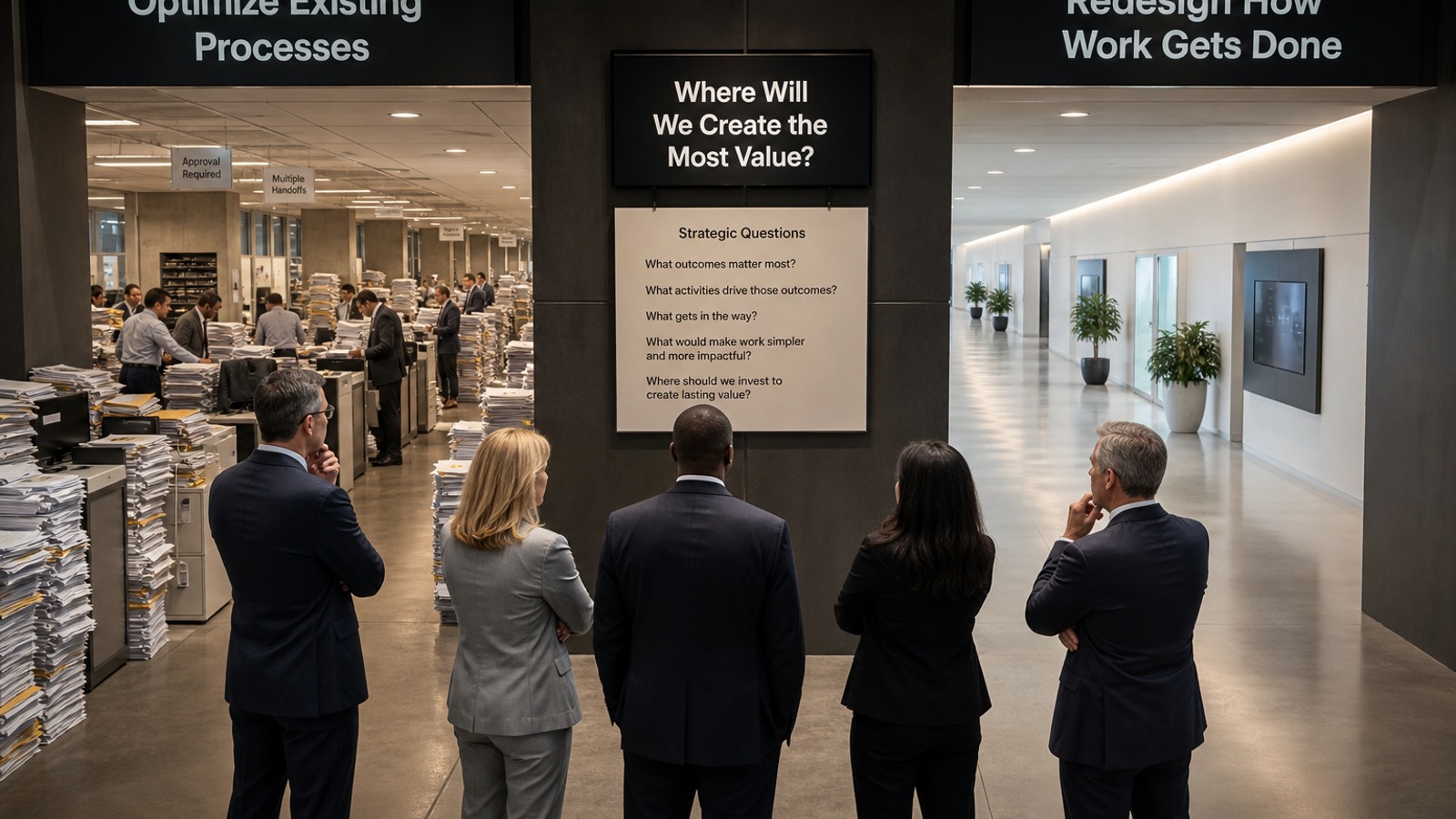
- Which workflows should be redesigned instead of simply accelerated?
- What proprietary data gives us a competitive advantage?
- Which skills become more valuable as AI becomes more capable?
- How will we measure productivity when part of the work is performed by AI?
- If we were starting this company today, with AI available, what would we build differently?
Notice what's missing from this list. There are no questions about prompts, chatbots, or which model is best.
Those are implementation details.
The larger issue is that most organizations are trying to bolt AI onto processes that were designed years ago. They are asking how AI can make existing work faster rather than asking whether the work should be done differently in the first place.
The companies that gain the most from AI won't simply automate tasks. They'll rethink roles, redesign workflows, and challenge assumptions that have been in place for decades.
The final question may be the most important of all:
If we were building this business today, knowing what AI can do, would we organize it the same way?
The organizations willing to answer that question honestly will likely have a significant advantage over those that treat AI as just another software upgrade.