AI Isn't the Advantage. Learning Is.
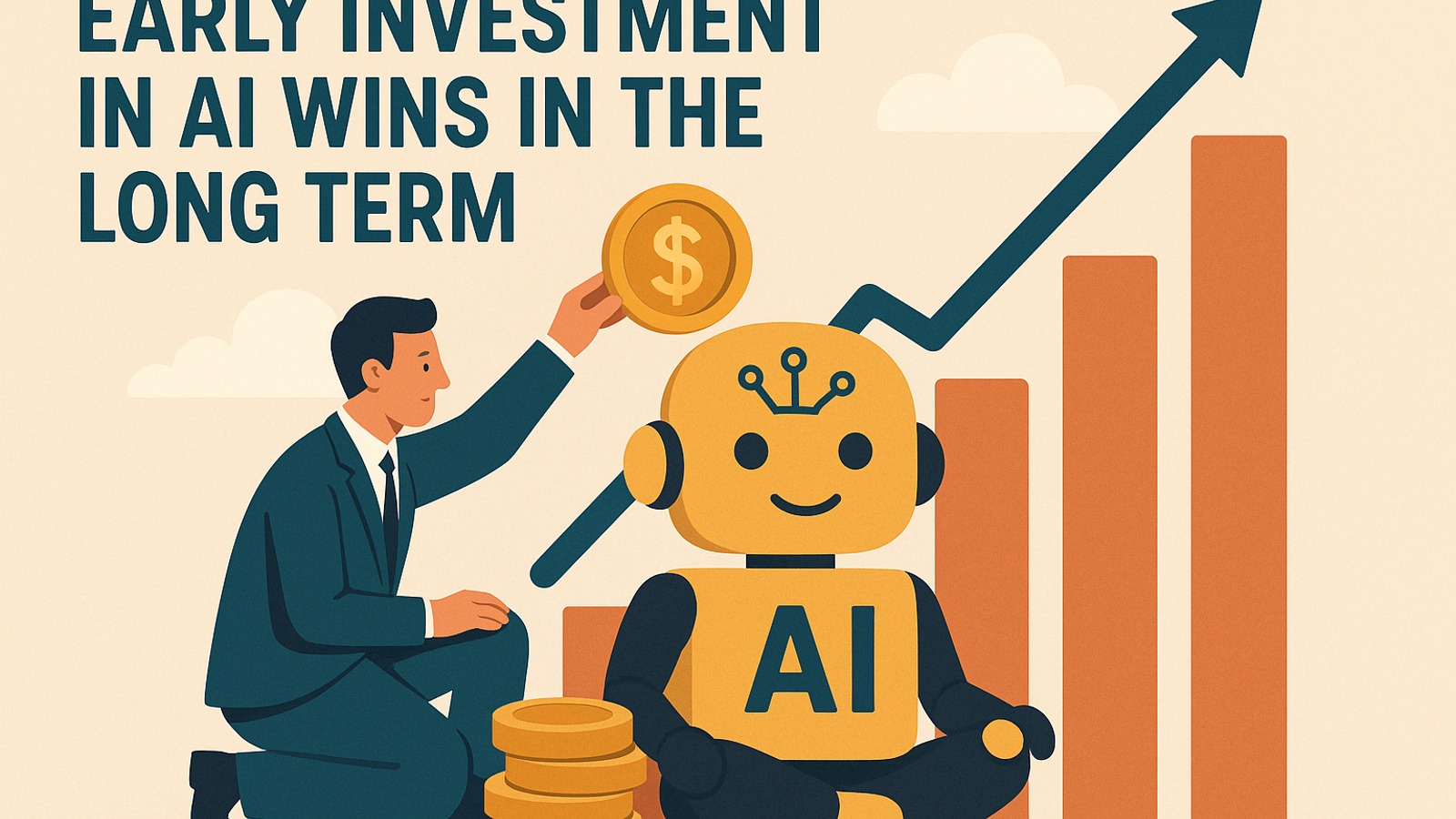
Early investment wins the game
One of the biggest misconceptions in the AI conversation is that business leaders are waiting for the technology to mature. In my experience, that's not what's happening at all.
Most leaders already believe the technology is real. They have experimented with ChatGPT, watched demonstrations, read articles, and seen enough examples to understand that artificial intelligence will have a meaningful impact on business. The challenge is not convincing them that AI matters. The challenge is helping them determine where it fits inside their organization.
For large enterprises with innovation teams, dedicated technology budgets, and entire departments focused on transformation, answering that question is difficult enough. For small and mid-sized businesses, it can feel overwhelming.
A manufacturing company in Kentucky, a regional trucking company, a professional services firm, a distributor, or a healthcare practice rarely asks whether AI is real. Instead, leaders are trying to determine which business problem deserves attention first and whether the investment of time and energy will produce meaningful results. As a result, many organizations find themselves waiting for the obvious use case to emerge. In reality, they are waiting for certainty.
The problem is that history suggests meaningful competitive advantages are rarely created through certainty. More often, they are created through learning.
Innovation Is Not Invention
One of the most misunderstood words in business is innovation. When people hear the term, they often think of invention. They imagine a breakthrough technology, a patent, or a revolutionary product that changes an industry overnight. But invention and innovation are not the same thing.
Invention is the creation of something new.
Innovation is the successful adoption and diffusion of an idea.
That distinction matters because most organizations are never asked to invent anything. Very few companies invent smartphones, cloud computing, or artificial intelligence. Yet thousands of organizations have created lasting competitive advantages by learning how to apply those technologies before their competitors do.
The market celebrates inventors because invention is exciting. Business history, however, is filled with companies that won not because they invented something first, but because they learned how to operationalize it better than everyone else.
The Starbucks Lesson
Consider Starbucks.
Today, mobile ordering, loyalty rewards, digital payments, and personalized offers feel like a normal part of the customer experience. Most customers barely think about them. Yet there was a time when none of those capabilities were standard.
Starbucks did not invent mobile payments or loyalty programs. What the company recognized was that these technologies could become more than customer conveniences. They could become part of the operating system of the business.
By investing early, Starbucks learned how customers behaved, how technology could remove friction from the purchasing process, and how digital engagement could strengthen loyalty. Over time, those lessons created operational efficiencies, richer customer data, and a more seamless customer experience.
The real advantage was never the technology itself. Competitors had access to the same tools. The advantage came from the learning that occurred while others were still deciding whether the investment was worthwhile.
Years later, competitors found themselves trying to catch up. Today, companies like McDonald's continue to invest heavily in digital engagement, automation, and AI-enabled experiences. The technology is broadly available. The experience gained from years of implementation is not.
The Delta Lesson
Delta Airlines followed a similar path.
Every major airline eventually adopted mobile boarding passes, digital check-in, and app-based customer experiences. The technology itself was not unique. What separated Delta was the way the company integrated those capabilities into a broader customer experience strategy.
While some airlines viewed technology primarily as an operational necessity, Delta increasingly viewed it as part of the brand experience. Customers didn't simply receive a digital boarding pass. They experienced a smoother and more consistent journey.
Over time, Delta's digital capabilities became aligned with its premium positioning in the marketplace. Customer expectations evolved, loyalty increased, and Delta strengthened its reputation. Once again, the advantage did not come from invention. It came from learning how to apply emerging technologies in ways that supported the broader business strategy.
What This Means for AI
This is why I believe many organizations are asking the wrong questions about AI.
They want certainty. They want a guaranteed return on investment. They want a clear roadmap and a proven use case before they commit time and resources.
Those desires are understandable, but they can also become barriers to progress.
The organizations creating value with AI today are not necessarily doing anything revolutionary. In many cases, they are using AI to improve reporting, reduce administrative work, accelerate research, streamline communication, or support customer interactions. Some initiatives succeed. Others fail.
That is not a problem.
Learning has always involved experimentation.
Every attempt teaches an organization something about where technology creates value, where it creates risk, how employees respond, and what governance is required. Over time, those lessons accumulate into institutional knowledge that competitors cannot easily replicate.
This is where many discussions about AI miss the point. The value is not found solely in the tool. The value is found in the organization's growing understanding of how to use the tool effectively.
The Opportunity for SMBs
This may be particularly important for small and mid-sized businesses.
SMBs rarely win because they have the largest budgets or the most resources. They win because they adapt faster, make decisions faster, and learn faster than larger competitors.
The opportunity is not to become an AI company. The opportunity is to become a learning organization.
Organizations that intentionally explore where AI can create value will develop practical experience long before adoption becomes mandatory. They will understand where the technology works, where it falls short, and how it can support their people and processes. Those lessons will shape future decisions in ways that are difficult for competitors to replicate.
Many business leaders are waiting for AI to present an obvious solution to an obvious problem.
History suggests the winners will be the organizations that approach AI as a learning exercise rather than a technology purchase. Innovation is not invention. Innovation is the successful adoption of an idea.
The organizations learning today will be the organizations leading tomorrow.