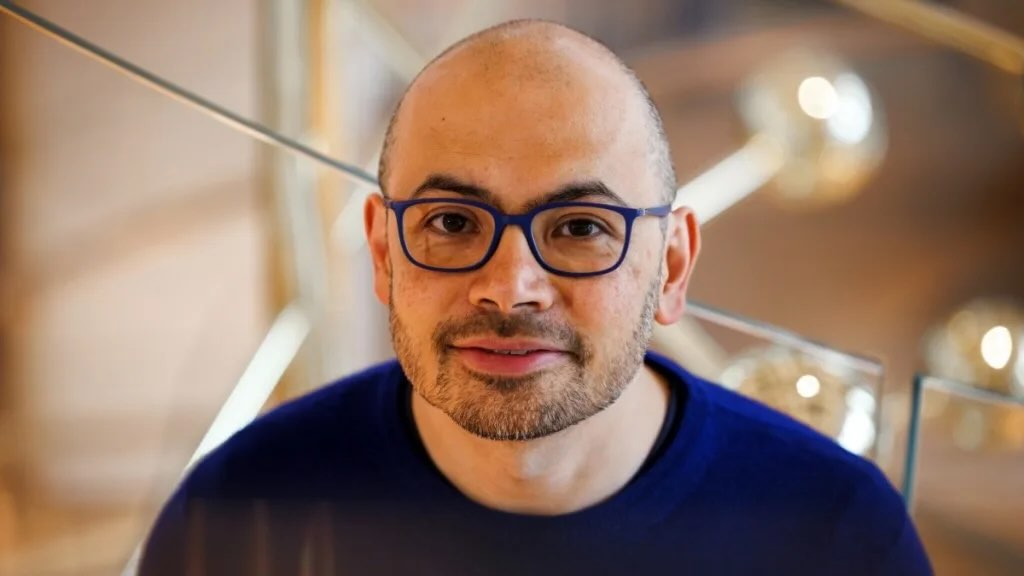
Demis Hassabis
Overview
Sir Demis Hassabis is the CEO and co-founder of Google DeepMind, the world's largest and arguably most influential AI research lab. In 2024, he became one of the few people in history to win a Nobel Prize for work done primarily through AI — sharing the Nobel Prize in Chemistry with John Jumper for AlphaFold's breakthrough in protein structure prediction. He simultaneously runs Isomorphic Labs, a startup spun out of DeepMind that aims to revolutionize drug discovery using AI, with preclinical cancer drug trials already underway.
Hassabis occupies a unique position in the AI landscape: he's both a deeply technical researcher with roots in neuroscience and a strategic leader navigating the competitive dynamics of the AI race at the highest levels of Alphabet. He talks to Google CEO Sundar Pichai daily, and under his leadership DeepMind has produced some of the most celebrated AI milestones of the past decade — from AlphaGo defeating the world Go champion to AlphaFold solving the 50-year protein folding grand challenge. In 2025-2026, his focus has shifted toward AGI timelines, AI safety, and applying AI to scientific discovery at unprecedented scale.
Background
- Current Role: CEO and Co-founder, Google DeepMind; CEO and Co-founder, Isomorphic Labs; UK Government AI Adviser
- Notable Roles: Founded DeepMind in 2010 (acquired by Google in 2014 for ~$500M); Led the merger of Google Brain and DeepMind into a single entity; Postdoctoral researcher at Harvard and MIT; Henry Wellcome Fellow at UCL
- Known For: AlphaFold (protein structure prediction, Nobel Prize), AlphaGo (defeating world Go champion Lee Sedol), Gemini model family, pioneering the use of deep reinforcement learning, co-designing the video game Theme Park at age 17 with Peter Molyneux
- Education: BA in Computer Science (Double First), Queens' College, Cambridge; PhD in Cognitive Neuroscience, University College London
- Honours: Nobel Prize in Chemistry (2024), Knighted (2024), CBE (2017), Fellow of the Royal Society
- Links: Wikipedia, Isomorphic Labs, Google DeepMind
Key Ideas & Perspectives
Hassabis's driving mission has always been to "solve intelligence, and then use that to solve everything else." He approaches AI from a neuroscience-first perspective, believing that understanding how the human brain works — particularly imagination, memory, and planning — is key to building truly general AI systems.
On AGI timelines, Hassabis has become increasingly specific. At the India AI Impact Summit in February 2026, he predicted AGI could arrive within five years (by ~2030) and described its impact as "ten times the Industrial Revolution, happening at ten times the speed — unfolding in a decade rather than a century." He's also proposed an "Einstein Test" as a benchmark for AGI — the ability to make Nobel-caliber scientific discoveries autonomously.
On AI safety, Hassabis takes a nuanced position. He warns about two major risk categories: bad actors repurposing beneficial AI for harm, and technical risks from increasingly autonomous systems. At the India summit he specifically flagged cybersecurity, noting that AI systems are already "getting pretty good at cyber" and that defenses must outpace offenses before AGI arrives. He advocates for global cooperation on AI governance rather than unilateral approaches.
On scientific discovery, Hassabis sees AI as the catalyst for a "new renaissance." He believes AI-driven drug discovery can become 1,000 times more efficient by moving from wet labs to in silico simulation. Through Isomorphic Labs, he's putting this thesis into practice, with preclinical cancer drug candidates already in development and clinical trials expected by end of 2026.
On scaling, Hassabis has been more candid than most lab leaders about practical constraints. In a January 2026 Semafor interview, he acknowledged that shortages of high-bandwidth memory and a pullback in open research have constrained AI's ability to scale as fast as some expected — a rare admission of physical limits in an industry that often projects pure optimism.
Update (April 2026): AGI by 2030 and Agents as the Path. In April 2026 appearances on the Y Combinator and 20VC podcasts, Hassabis stabilized his AGI timeline at roughly 2030 — slightly longer than the 5-year window he gave at the India AI Impact Summit — and said "one or two big ideas" are still missing. He emphasized that agents are the path to AGI: "you have to have an active system that can actively solve problems for you to get to AGI." He also made a notable historical claim that ~90% of the breakthroughs underpinning the modern AI industry came from Google Brain, Google Research, or DeepMind — a stronger competitive framing than he typically uses in public.
Recent Activity
Articles & Writing
-
"The Paradox of AI Progress" — Semafor Interview (January 21, 2026) — Hassabis discussed the tension between AI's extraordinary potential and the practical bottlenecks constraining its advancement, including hardware shortages and reduced open research collaboration. Semafor
-
Fortune Profile: "How Demis Hassabis is leading Google through an AI revolution" (February 2026) — In-depth profile covering his dual role at DeepMind and Isomorphic Labs, his Nobel Prize, and his vision for AI-driven scientific discovery. Notes he starts a "second workday" at 10pm and hits peak productivity at 1am. Fortune
Videos & Talks
-
India AI Impact Summit 2026 (February 16-20, 2026) — Keynote and panel appearances in New Delhi. Predicted AGI within 5 years with 10x Industrial Revolution impact. Warned about AI cybersecurity risks. Called India a future "powerhouse" in AI. Announced expanded Google DeepMind research partnerships with Indian government agencies and educational institutions. BusinessToday
-
"Einstein Test" for AGI Proposal (February 25, 2026) — Proposed that AGI should be measured not just by matching human performance on existing benchmarks, but by its ability to make genuinely novel scientific discoveries comparable to Einstein-level contributions. Asia Business Daily
Podcasts & Interviews
-
CNBC Interview (January 16, 2026) — Discussed the "ferocious" AI competition and revealed he speaks with Google CEO Sundar Pichai every day. Also warned that China is "just months behind" US AI models, framing the AI race as a tight global contest. CNBC
-
Fortune: AI Renaissance Interview (February 11, 2026) — Predicted a "new golden era of discovery" and a "kind of new renaissance" driven by AI within 10-15 years, describing a future of "radical abundance." Fortune
-
Bloomberg Interview (February 19, 2026) — Called for global cooperation on AI risks at the India AI Impact Summit. Warned about the dual-use nature of AI technology and the need for international frameworks. Bloomberg
-
Axios Exclusive (December 5, 2025) — Stated that "transformative" AGI is "on the horizon," describing the trajectory of Gemini and DeepMind's roadmap toward general intelligence. Axios
-
20VC with Harry Stebbings (April 7, 2026) — Hassabis described how Google DeepMind has accelerated by merging Google Brain's compute with DeepMind's research culture and returning to a "scrappier," startup-style way of working. Asserted that roughly 90% of the breakthroughs underpinning the modern AI industry came out of Google Brain, Google Research, or DeepMind. Discussed why AGI is "bigger than the Industrial Revolution," why LLMs won't commoditize, scaling-law limits, energy bottlenecks, and described running Isomorphic Labs as a "second workday" starting around 10pm with human oncology trials expected later in 2026. https://thenextweb.com/news/google-deepmind-hassabis-startup-pace
-
Y Combinator "How to Build the Future" with Garry Tan (Late April 2026) — Hassabis pegged his AGI timeline at "2030 or something like this" and said there may be "one or two big ideas left" needed for AGI. Emphasized that "you have to have an active system that can actively solve problems for you to get to AGI — so agents are that path." https://startup.whatfinger.com/2026/04/29/how-to-build-the-future-demis-hassabis/
-
The Economist Profile by Sebastian Mallaby (April 2026) — Long-form profile drawing on three years of access by biographer Sebastian Mallaby, covering Hassabis's path from researcher to CEO and how he was "swept into a commercial and geopolitical contest he never expected." Tied to the publication of "Infinity Machine," a portrait of Hassabis featured on NPR's Book of the Day on April 28, 2026. https://www.npr.org/2026/04/28/nx-s1-5801607/nprs-book-of-the-day-demis-hassabis-infinity-machine
-
"Google for Korea 2026" — Reunion with Lee Sedol (April 29, 2026) — Hassabis appeared on stage in Seoul with Go legend Lee Sedol, ten years after AlphaGo's historic victory, to discuss AI's evolution since 2016 and Korea's role in the next AI wave. https://letsdatascience.com/news/demis-hassabis-reunites-with-lee-sedol-after-alphago-match-d6f2e377
Last Updated
May 5, 2026