Leopold Aschenbrenner
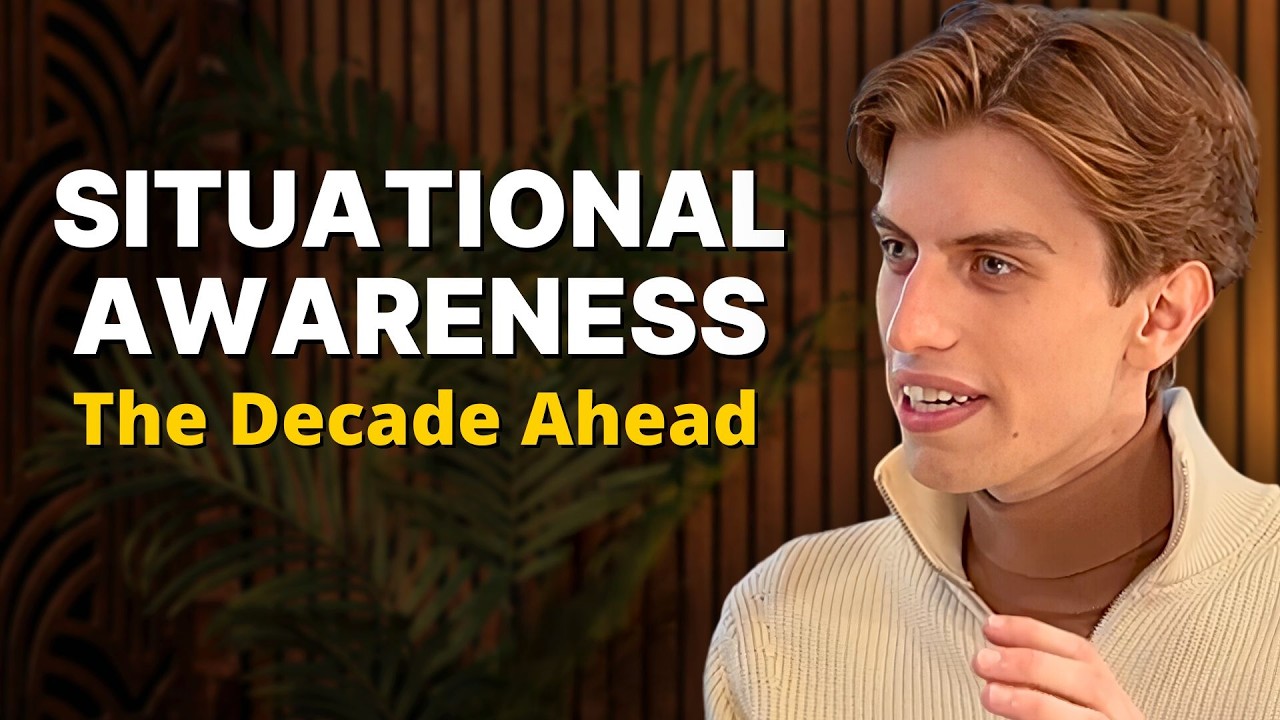
Leopold Aschenbrenner is a German-American AI researcher and investor who became one of the most prominent voices in AI strategy discourse after publishing the June 2024 essay series "Situational Awareness"
Overview
Leopold Aschenbrenner is a German-American AI researcher and investor (born ~2001) who became one of the most prominent voices in AI strategy discourse after publishing the June 2024 essay series "Situational Awareness: The Decade Ahead." A former member of OpenAI's Superalignment team under [[Ilya Sutskever]] and [[Jan Leike]], he was fired in April 2024 over what he describes as a memo to the OpenAI board flagging concerns about industrial espionage and inadequate security against the CCP. His core thesis — that straight-line extrapolation of compute, algorithmic efficiency, and "unhobbling" implies AGI by ~2027 and superintelligence shortly after — reframed AGI as a national-security problem, not just a research one. The essay set off intense debate among policymakers, founders, and researchers, popularized the "trillion-dollar cluster" framing, and became required reading inside Washington and Silicon Valley. Aschenbrenner graduated as valedictorian of Columbia University at 19 and previously worked at the Future of Humanity Institute / Global Priorities Institute orbit at Oxford.
In mid-2024 he founded Situational Awareness LP, a San Francisco-based AGI-themed long/short hedge fund seeded by [[Patrick Collison]], John Collison, [[Daniel Gross]], and Nat Friedman. The fund grew to roughly $1.5B AUM by mid-2025 and reportedly to ~$5.5B in U.S. equity exposure by Q4 2025 / early 2026 filings, with concentrated bets across semiconductors, power generation, data-center operators, and crypto miners pivoting to AI compute. He continues to publish at situational-awareness.ai and forourposterity.com, and has become a fixture on AI podcasts — most notably his ~4.5-hour appearance on [[Dwarkesh Patel]]'s show in June 2024, widely cited as one of the year's defining AI conversations.
Background
- Current Role: Founder and Chief Investment Officer, Situational Awareness LP (AGI-focused hedge fund / investment firm, ~$5.5B in disclosed U.S. equity exposure as of early 2026)
- Notable Roles: Researcher, OpenAI Superalignment team (2023–April 2024); research affiliate at the Global Priorities Institute, Oxford; co-founder of Columbia's Effective Altruism chapter; valedictorian of Columbia University (graduated 2021 at age 19, economics and math-statistics)
- Known For: "Situational Awareness: The Decade Ahead" (June 2024); the AGI-by-2027 thesis; the "Project" framing for nationalized superintelligence development; the trillion-dollar compute cluster forecast; high-profile Dwarkesh Patel podcast appearance; co-author of OpenAI's "Weak-to-Strong Generalization" paper
- Links: Wikipedia, Situational Awareness, For Our Posterity blog, Twitter/X, Dwarkesh Podcast appearance
Key Ideas & Perspectives
Aschenbrenner's central argument in "Situational Awareness" is empirical and almost mechanical: if you simply extrapolate the trend lines of effective compute (a combination of raw FLOPS scaling and algorithmic efficiency gains) from GPT-2 through GPT-4, you get another several orders-of-magnitude jump within a few years. He calls the gap from GPT-4 to AGI roughly the same size as the gap from GPT-2 to GPT-4, and argues this is the default trajectory unless something explicitly stops it. The headline conclusion — AGI plausibly by 2027, and superintelligence soon after via recursive automation of AI research itself — is presented not as speculation but as the boring base case once you take the curves seriously.
A second pillar is the concept of "unhobbling." Aschenbrenner argues that current frontier models are operating far below their underlying capability because they are constrained in how they reason, use tools, run agentic loops, and learn from their own mistakes. Adding long-horizon agents, test-time compute, system-2 reasoning, and richer context — none of which require new fundamental breakthroughs — should unlock large effective capability gains on top of raw scaling. This framing has aged well as the industry shifted toward reasoning models and agentic workflows during 2025.
The most controversial pillar is geopolitical. Aschenbrenner treats superintelligence as a national-security asset on par with nuclear weapons and argues the United States must win the race against the Chinese Communist Party. He calls for what he terms "the Project" — a nationalized or USG-tightly-coupled effort to build the trillion-dollar training cluster, backed by hardened security, classified weights, export controls on chips and equipment, and dramatically improved counter-intelligence at frontier labs. His memo to OpenAI's board, which he says ultimately got him fired, argued that OpenAI's security against state-actor exfiltration was wholly inadequate; he has been publicly critical of the lab's posture ever since. He has also warned strongly against locating frontier compute clusters in the Gulf states, arguing this effectively hands superintelligence to autocracies.
His views overlap with [[Sam Altman]] and other accelerationists in expecting near-term AGI, taking compute build-outs seriously, and treating AI as a transformative technology that the U.S. must lead. But he diverges from the OpenAI mainstream in his explicit national-security framing, his harder line on China, his preference for government coupling over a purely commercial frontier, and his sharp critique of lab security culture. He is also markedly more concerned about capability than the average accelerationist — closer in tone to [[Dario Amodei]] than to a pure techno-optimist. At the same time, he diverges sharply from [[Eliezer Yudkowsky]]-style doomers: he does not believe alignment is intractable, he is bullish on continued progress, and he does not advocate slowdowns or moratoria. Instead he frames the alignment challenge as solvable but underinvested, and the bigger civilizational risk as losing the race to an authoritarian rival rather than misalignment per se.
He repeatedly cites and engages with [[Ilya Sutskever]], [[Jan Leike]], [[Dario Amodei]], [[Sam Altman]], and figures around the AGI forecasting community. His public platform was largely catalyzed by [[Dwarkesh Patel]]'s long-form podcast, and his investor base — anchored by [[Patrick Collison]], John Collison, Nat Friedman, and Daniel Gross — reflects the same Silicon Valley network that has funded much of the frontier AI build-out.
Recent Activity
Articles & Writing
- "Situational Awareness: The Decade Ahead" (June 2024) — The 165-page essay series that made him a household name in AI policy circles. Covers the path from GPT-4 to AGI, "unhobbling," the trillion-dollar cluster, the lock-down argument, superalignment, "the Project," and parting thoughts. situational-awareness.ai
- For Our Posterity blog (ongoing, 2020–present) — His personal essays on AI, growth, existential risk, and policy, including reflections that prefigured the Situational Awareness thesis. forourposterity.com
- "Dwarkesh podcast on SITUATIONAL AWARENESS" (June 2024) — Companion post on his blog accompanying the Dwarkesh release, framing the essay's launch. forourposterity.com
- "Weak-to-Strong Generalization" (December 2023) — Co-authored OpenAI Superalignment paper on supervising stronger models with weaker ones; later presented at ICML 2024. OpenAI
- Fortune profile: hedge fund and influence (October 2025) — Detailed reporting on how Aschenbrenner turned the viral essay into a ~$1.5B fund with reach into D.C. and Silicon Valley. Fortune
- Fortune: power, miners, and the AI boom (March 2026) — Reporting on Situational Awareness LP's bets on power companies and bitcoin miners pivoting to AI compute as the bottleneck shifts from chips to electrons. Fortune
- Motley Fool: top holdings breakdown (April 2026) — Coverage of Situational Awareness LP's concentrated portfolio of roughly two dozen names tied to the AGI build-out. Motley Fool
Videos & Talks
- Stanford Digital Economy Lab fireside chat with Erik Brynjolfsson (September 30, 2024) — On-stage conversation at Stanford about the path from GPT-4 to AGI and the implications laid out in Situational Awareness. Stanford Digital Economy Lab
- Bay Area AI talks and salons (2024–2026) — Aschenbrenner has spoken at private and semi-private convenings around the SF AI scene tied to the Situational Awareness essay; most are off-the-record but referenced in subsequent press coverage.
Podcasts & Interviews
- Dwarkesh Podcast: "2027 AGI, China/US super-intelligence race, & the return of history" (June 4, 2024) — The ~4.5-hour episode that launched Situational Awareness into the mainstream AI conversation, covering the trillion-dollar cluster, unhobbling, CCP espionage at AI labs, his OpenAI departure, and starting his fund. Dwarkesh Podcast
- The Neuron: AI Explained — "Artificial General Intelligence Is Coming" (2024) — Conversation with Aschenbrenner walking through the core Situational Awareness thesis for a broader tech audience. Spotify
- Ben Yeoh Chats (2021) — Earlier long-form interview on existential risk, German culture, and his Columbia valedictorian arc; useful pre-OpenAI context. Apple Podcasts
- Apple Podcasts mirror of the Dwarkesh episode (June 2024) — Audio-platform listing of the canonical Dwarkesh interview. Apple Podcasts
- Spotify mirror of the Dwarkesh episode (June 2024) — Spotify listing of the canonical Dwarkesh interview. Spotify
- Discussion / response episodes — Zvi Mowshowitz's detailed critique of the Dwarkesh interview captures the broader AI-safety community's reaction. Don't Worry About the Vase
Books
No books published as of May 2026. The "Situational Awareness" series functions as book-length writing in essay form, and a longer-form book based on the thesis has been rumored but not publicly announced.
Last Updated
May 5, 2026