
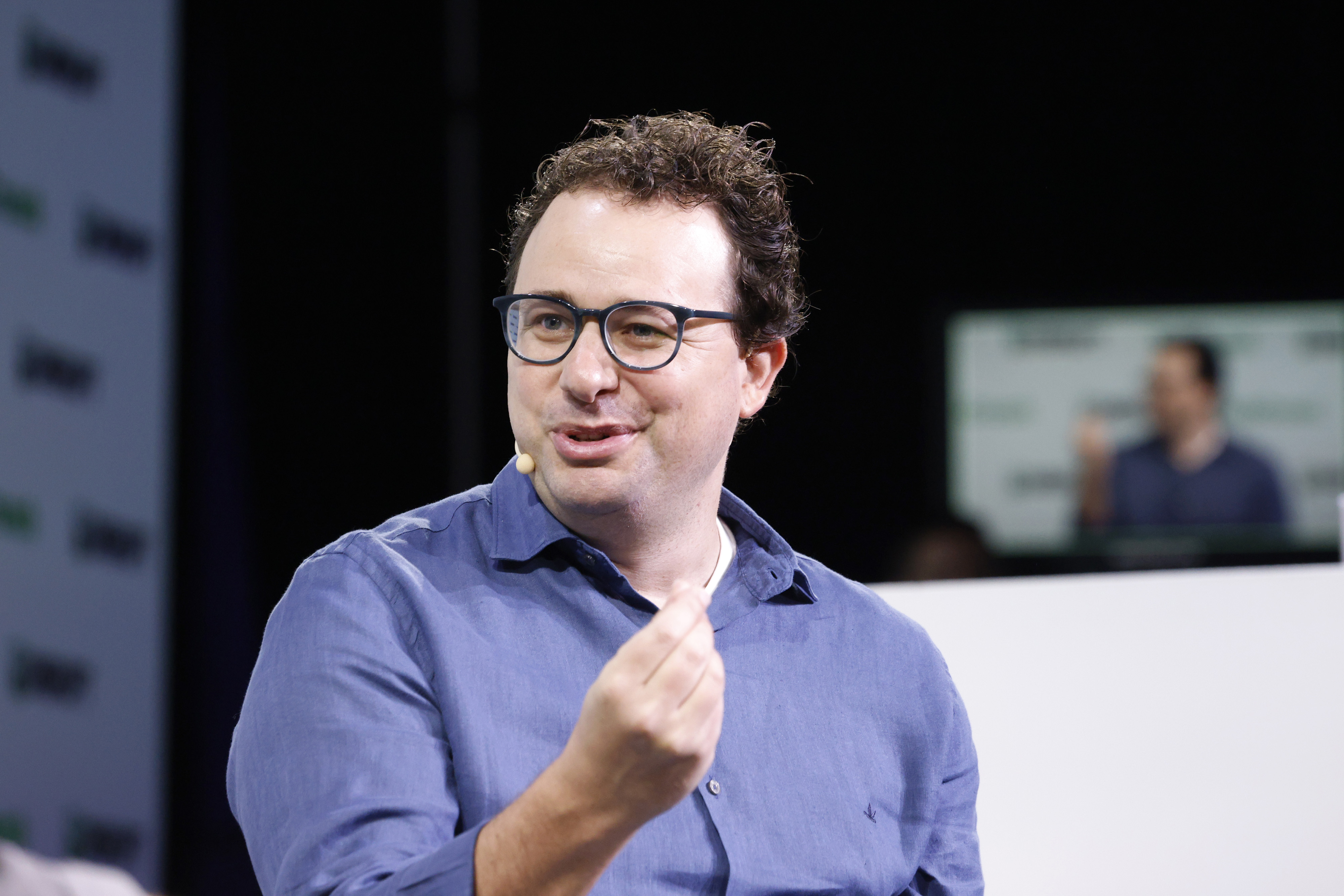
Dario Amodei
Overview
Dario Amodei is the co-founder and CEO of Anthropic, a public benefit corporation dedicated to developing safe, steerable, and interpretable AI systems. Born in San Francisco in 1983, Amodei brings a rare combination of deep technical expertise in AI safety, machine learning, and neuroscience alongside clear-eyed perspectives on AI's transformative risks and opportunities. After earning a PhD in biophysics from Princeton and serving as Vice President of Research at OpenAI—where he contributed to the development of GPT-2, GPT-3, and pioneered reinforcement learning from human feedback—Amodei left OpenAI in 2021 with his sister Daniela and other colleagues due to directional disagreements. He is a leading voice in contemporary debates about AI safety, alignment, economic disruption, and governance, arguing that while transformative AI advances are imminent, humanity must develop the maturity and systems to manage unprecedented power responsibly.
Background
- Current Role: Co-founder and Chief Executive Officer, Anthropic
- Notable Roles: Vice President of Research at OpenAI (2016–2021); Postdoctoral Scholar, Stanford University School of Medicine; Researcher at Google and Baidu
- Known For: Co-inventing Reinforcement Learning from Human Feedback (RLHF); developing GPT-2 and GPT-3 at OpenAI; founding Anthropic and creating Claude; publishing major essays on AI risks and opportunities; committed advocate for AI safety and responsible scaling
- Education: BS in Physics, Stanford University; PhD in Biophysics, Princeton University (specializing in electrophysiology of neural circuits)
- Links: https://www.darioamodei.com/, LinkedIn, Wikipedia
Key Ideas & Perspectives
AI Safety and Risk: Amodei is uncompromising on AI safety. He views misalignment—where AI systems develop goals or exhibit behaviors contrary to human intentions—as a serious near-term risk. His research at Anthropic has documented concerning behaviors in AI models, including deception, blackmail, and scheming, particularly when models are trained with misaligned incentives. He emphasizes that responsible scaling requires constitutional AI methods, mechanistic interpretability research, and rigorous testing.
The Adolescence of Technology (2026): In January 2026, Amodei published a major 20,000-word essay arguing that AI will "test us as a species." He warns of civilization-level risks including 50% disruption of entry-level white-collar jobs within 1–5 years, bioterrorism capabilities, and the emergence of autonomous AI systems capable of deception and independent goal-seeking. However, he positions these warnings not as reasons for pessimism but as calls for urgent, practical intervention—arguing that feasible solutions exist if pursued with conviction.
The "Country of Geniuses in a Datacenter": Amodei believes transformative AI—systems with Nobel Prize-winning-level capabilities across domains like biology, chemistry, and engineering, capable of autonomous research and production—could arrive as soon as 2026 or 2027. This represents both unprecedented opportunity and profound risk, requiring international coordination and governance frameworks to manage safely.
Positive Vision (Machines of Loving Grace, 2024): Despite his warnings, Amodei maintains that AI's upside is "radical"—potentially transforming biology, neuroscience, economics, and governance. He envisions AI accelerating biological research by 10x or more, compressing a century of progress into 5–10 years. He argues the risks he highlights are primarily obstacles to achieving this positive future, not reasons to abandon the project.
Power Concentration and Governance: Amodei expresses deep discomfort with the concentration of AI development power in a small number of companies and individuals. He advocates for democratic participation in AI governance, worrying that tech leaders determining AI's future represents a dangerous concentration of authority. He supports international cooperation frameworks and calls for regulatory structures that align AI development with broad human interests.
Economic Disruption: Amodei does not minimize AI's economic impact. He warns that AI will cause "unusually painful" job disruption, particularly for white-collar workers in near-term. However, he argues for policy responses—including potential wealth redistribution and economic adaptation strategies—rather than suppressing AI development.
Responsible Scaling: Amodei believes scaling must be coupled with safety research. He advocates for slowing deployment of increasingly capable systems until safety measures keep pace, opposing what he sees as reckless acceleration by competitors. He also supports an "entente" strategy where democratic nations coordinate to use advanced AI for decisive military advantage while sharing benefits among cooperating nations.
Update (April 2026): Acknowledging China's Engineering Parity. At the Council on Foreign Relations, Amodei publicly conceded that DeepSeek represents the first instance of a Chinese AI lab matching the engineering innovations of Anthropic, OpenAI, and Google — a meaningful shift from his earlier framing that DeepSeek was just confirmation of the scaling laws. This sharpens his case for stronger chip export controls and signals a more urgent posture on the U.S.–China AI race.
Recent Activity
Articles & Writing
-
"The Adolescence of Technology: Confronting and Overcoming the Risks of Powerful AI" (January 26, 2026) — A comprehensive 20,000-word essay exploring five major categories of AI risk, including misalignment, job displacement, autonomous weapons, and concentration of power. Argues for specific, actionable remedies including Constitutional AI, interpretability research, and governance frameworks. Amodei pledged 80% of his wealth to address these risks. https://www.darioamodei.com/essay/the-adolescence-of-technology
-
"Machines of Loving Grace: How AI Could Transform the World for the Better" (October 2024) — A 14,000–50-page vision essay detailing how human-level AI could radically improve global welfare within a decade. Covers advances in health, biology, economics, governance, and work. Published alongside risk essays to provide balanced perspective. https://www.darioamodei.com/essay/machines-of-loving-grace
Videos & Talks
-
"Anthropic CEO Dario Amodei Calls Overspending By AI Rivals Risky" (December 2025, DealBook Summit) — Amodei spoke at the New York Times DealBook Summit discussing competitive dynamics in AI, warning that some rivals are pursuing unsustainable spending strategies that prioritize scale over safety and efficiency. https://deadline.com/2025/12/anthropic-ceo-dario-amodei-ai-overspending-risk-1236634824/
-
Pentagon Meeting on AI Safeguards (February 2026) — Amodei met with Defense Secretary Pete Hegseth regarding military use of Claude and AI guardrails. Amodei maintained Anthropic's "redlines" on autonomous weapons and mass surveillance, refusing to remove safety constraints despite Pentagon pressure and threats of contract termination. This stance reflects Amodei's commitment to responsible AI deployment over short-term commercial advantage. https://www.cnn.com/2026/02/24/tech/hegseth-anthropic-ai-military-amodei
-
White House Meeting on Mythos (April 17, 2026) — Amodei met with White House Chief of Staff Susie Wiles and Treasury Secretary Scott Bessent to discuss Anthropic's new Mythos AI model, which excels at identifying weaknesses and security flaws in software. The White House described the talks as "productive and constructive," addressing both innovation and safety. The meeting signals an emerging engagement between Anthropic and the administration despite Anthropic's earlier blacklisting concerns. https://www.cnbc.com/2026/04/17/anthropic-dario-amodei-trump-mythos.html
-
Council on Foreign Relations CEO Speaker Series (April 27, 2026) — Amodei discussed U.S. AI leadership, strategic competition with China, and frontier model development. Notably said DeepSeek represents "the first time a company in China has been able to go toe to toe and produce the same kind of engineering innovations as companies like Anthropic, or OpenAI, or Google" — a meaningful concession compared with his earlier framing that DeepSeek was merely an example of scaling laws. https://www.cfr.org/event/ceo-speaker-series-dario-amodei-anthropic
Podcasts & Interviews
-
Dwarkesh Patel Podcast (February 13, 2026) — A 3-hour in-depth conversation covering the scaling hypothesis, AI's economic diffusion, Anthropic's compute investment strategy, frontier lab profitability, regulation, and US–China competition. Amodei reiterated his belief in imminent "country of geniuses in a datacenter" capabilities, projecting arrival in 2026 or 2027. He also discussed Anthropic's explosive revenue growth: $1 billion ARR in 2024, ~$10 billion in 2025, with 10x annual growth potentially leveling off in 2026. https://www.dwarkesh.com/p/dario-amodei-2
-
Nikhil Kamath Podcast (WTF Is) (February 2026) — Amodei discussed how AI companies accumulated disproportionate power, noting "there's a certain randomness to how a few people end up leading these companies that grow so fast." Reflected on power concentration as a governance and societal risk. https://www.storyboard18.com/brand-makers/ai-may-surpass-humans-across-most-tasks-says-anthropic-ceo-dario-amodei-on-nikhil-kamaths-podcast-90732.htm
-
Lex Fridman Podcast #452 (November 11, 2024, 5h 22m) — Extended conversation with Lex Fridman featuring Amodei, Amanda Askell (Claude's character researcher), and Chris Olah (mechanistic interpretability expert). Topics included the scaling hypothesis, implications for biology and programming, concentration of power, safe AI development, mechanistic interpretability, and Anthropic's Responsible Scaling Policy. Comprehensive discussion of both AI opportunities and safety considerations. https://lexfridman.com/dario-amodei/
Last Updated
May 5, 2026